Built by people who also get too many emails.
We started Inboxwright because we were drowning — and the tools that existed solved the wrong problem.
The problem with "AI writes email."
In late 2023, Hannah Liu was running partnerships for a Seattle-area software team. Her inbox averaged over 90 messages a day. Most of them were table-stakes correspondence — follow-ups, status requests, scheduling threads, introductions that needed a polite reply. Fast to write, but there were a lot of them. She was spending the first 90 minutes of every workday just composing.
She tested every AI email product she could find. They all produced the same thing: a competent, generic, slightly robotic draft that she then had to rewrite to sound like herself. Which took roughly as long as writing from scratch. The AI hadn't solved anything — it had moved the cognitive load one step left.
The problem wasn't that AI couldn't write. The problem was that it didn't know how she wrote — to this particular person, at this particular level of formality, with the specific shorthand she'd built up over months of conversation. That information existed. It was sitting in her sent folder. No tool was reading it.
She started building Inboxwright with Alex Chen in early 2024, in Bellevue, WA. The core question was: what does voice-matched drafting actually require? The answer turned out to be: per-sender sent history, not a general language model prompt. That framing drove every product decision that followed.
We're bootstrapped. We're small. We're working on exactly one problem.

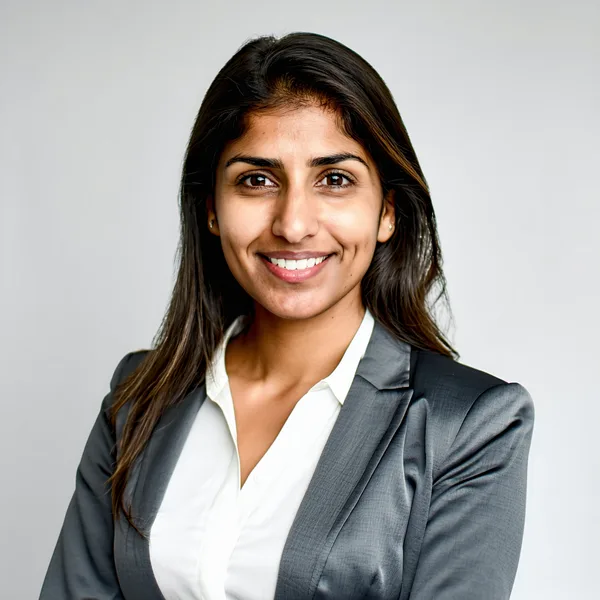
The team.

What we believe.
Private by default
Email is the most personal professional medium there is. Any tool that touches it earns trust by being specific about what it does and doesn't do with that access. We don't store message content. We never will. That's not a policy we review — it's a constraint we built around.
Voice before speed
A draft that saves you time but sounds like a robot costs you something harder to recover: the trust of the person reading it. We optimize for voice accuracy first. Speed is the byproduct, not the goal.
Less inbox, more thinking
Correspondence is not the work. It's the overhead that surrounds the work. Inboxwright's job is to handle the overhead so you can spend more time on the things that actually require your judgment.
We built this for ourselves. Try it for two weeks.
Free trial, no credit card. Connect in 2 minutes. Cancel from your Google or Microsoft settings if it's not right for you.
Start free trial Or get in touch →